Jump to content

Fellowships

Neonatal medicine

Mission

The neonatal-perinatal fellowship at Children’s Hospital of Richmond at VCU is a three-year ACGME accredited program in which the primary goal is to prepare highly-motivated physicians for careers as scientists, investigators and clinicians. Not all of our graduates have chosen to pursue full-time academic careers, but they are uniformly pleased that the experiences, tools and teaching they received were top-notch preparations for whatever professional path they chose. We are proud of our graduates and the fact that over the past 15 years they have all passed Neonatal Boards on the first attempt is a reflection of both who they are and of the training they received.

Clinical training

The clinical training experience is centered in the new neonatal intensive care unit, which consists of 32 single-bedded rooms and four twin-bedded rooms. The NICU takes up an entire floor of the new critical care hospital building and is connected via a short walk-way to the labor and delivery unit. There are more than 340 admissions per year, from inner city Richmond and the greater Richmond area, from Central Virginia and from patients referred to the four staff perinatologists. There is a very active pediatric cardiology service that supports fetal diagnoses, four pediatric surgeons, pediatric CT surgery, a world-renowned genetics program and complete subspecialty support. There is an active ECMO program, body cooling for asphyxia, high frequency (jet and oscillator) ventilation and more.

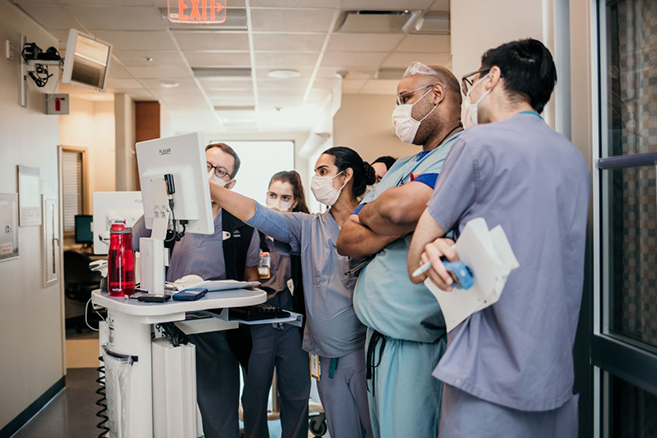
The fellow takes on increasing responsibilities for attending deliveries, supervising and teaching house staff, directing patient care and performing procedures as they progress through the program. Fellows are on service (along with a faculty member) for approximately six four-week blocks in the first year, four in the second and two in the third. By their final year, they can expect to have some managerial responsibilities for the NICU while they are on service. Night call averages four to six nights per month.

The NICU experience is supplemented and enhanced by a two-week high-risk perinatology rotation to deepen understanding of the role and tools in this field; attendance once per month when not on NICU rotation at pulmonary BPD clinic; and attendance once per month while not on NICU rotation at the NICU follow-up clinic.

Research training

The range of research possibilities is almost limitless. Fellows can work with neonatal faculty, with faculty from other pediatric divisions, or other medical school or university faculty. In prior years, fellows have performed research under the mentorship of investigators from the School of Medicine and the Department of Neurosurgery. We can provide support for fellows interested in pursuing an advanced degree in public health or in clinical research.

At the beginning of the program, fellows attend an introductory course in clinical research design, research ethics, working with subjects protection committees and some introductory biostatistics. Working with the program director and faculty, they identify and meet with a mentor within an area of research that meets the fellow’s interest. By the end of the first year, background reading is done, and a protocol is written and approved by the appropriate regulatory body.

With about eight months protected time in the second year, fellows perform the needed steps to obtain the data and learn how to analyze the data. They are instructed on abstract presentation and encouraged to submit to (and often present at) regional and national meetings. Many fellows have a manuscript ready by the end of the second year.

In the third year, there is sufficient time and support to complete data analysis and manuscript preparation and most fellows undertake a second or even third project, either as a natural extension of their primary project or, for example, in clinical research if their primary efforts have been in more basic research. Applying for grants is taught and encouraged. Most fellows have completed at least two projects before graduation.

Examples of fellow publications

Cruz MA, Bremer YA, Porter BO, Gullquist SD, Cole CH, Watterberg KL, Rozycki HJ. Cardiac troponin T and cardiac function in extremely low birthweight infants. Pediatric Cardiology. 2006;27:396-401.

Bourbia A, Cruz MA, Rozycki J. NF-B in Tracheal Lavage Fluid from Intubated Premature Infants: Association with Inflammation. Oxygen and Outcome. Arch Dis Child. 2006;91:F36-9.

Powell K, Kerkering KW, Barker G, Rozycki HJ. Dexamethasone Dosing, Mechanical Ventilation and the Risk of Cerebral Palsy. J  Maternal-Fetal Neonatal Med. 2006;19:43-8

Masalunga C, Cruz M, Porter B, Roseff S, Chui B, Mainali E. Increased hemolysis from saline pre-washing RBCs or centrifugal pumps in neonatal ECMO. J Perinatol. 2007;27:380-4.

Masalunga C, Rozycki HJ, Mainali ES. The impact of hyperoxia on the developing dendritic cell: neonatal versus adult. Pediatr Res. 2007;62:78-82.

Altirkawi K, Rozycki HJ. Hypocalcemia Is a Common Occurrence in the First 48 Hours of Life in ELBW Infants. J Perinat Med. 2008;36:348-53.

Lim L, Rozycki HJ. Postnatal SNAP-II Scores in NICU Patients: Relationship to Sepsis, Necrotizing Enterocolitis and Death. J Maternal-Fetal Neonatal Med. 2008;21:415-9.

Conferences

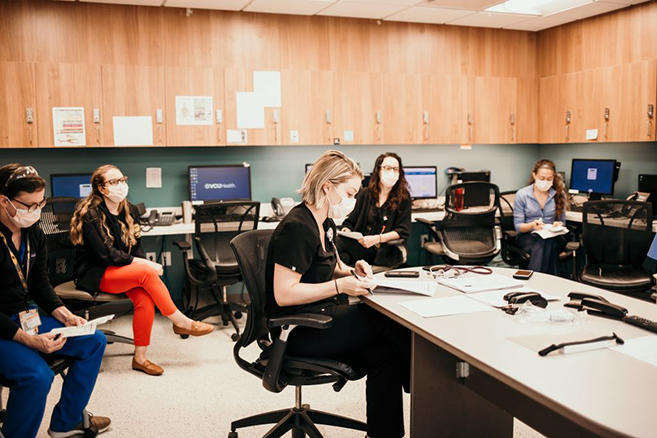
Direct clinical experiences are supplemented by didactic and small group conferences. During the first three months, fellows attend a weekly series that introduces the principles and practices of clinical research. There are online modules on literature review, introductory statistics, paper and abstract preparation and adult learning principles. Once per week, there is a divisional meeting to review new and interesting patients so that even when not on clinical service, fellows can benefit and learn from clinical opportunities. Twice per month previous births and impending high risk deliveries are reviewed with the perinatal service. There is a bi-monthly morbidity and mortality conference, at which fellows present topics three times per year. Within the division, we hold a monthly journal club, and a monthly evidence-based medicine meeting. Research conferences are convened at least four times per year and usually more frequently. Finally, neonatal physiology and development are reviewed over a two-year cycle as a mini-Board prep.

Beyond the divisional level, fellows can take advantage of regularly scheduled grand rounds and graduate medical education conferences, departmental research conferences, and the many special meetings and guest speakers from within the medical school community.

How to apply

The Neonatology Fellowship program is accredited by the Accreditation Council for Graduate Medical Education. This fellowship program participates in the National Residency Match Program (NRMP) and the Electronic Residency Application Service (ERAS). In general, applications through ERAS are reviewed beginning in early December, interviews are scheduled between January and July and the NRMP match occurs in late September in the year prior to the start of the fellowship. Please refer to the ERAS website for current dates and deadlines. Application to the fellowship program is highly competitive. Persons who wish to apply should be board-eligible or board-certified in pediatrics. Applications from women and minorities are encouraged.

ACGME Program ID: 3295121061

Please note: Three letters of recommendation, including one letter from the applicant’s residency program director and one from the chief of neonatology or designee are required.

University policy on the selection and recruitment of residents and fellowsPDF
If there are any further questions, interested applicants should contact Jennifer Nelson-Dowdy.

View fellowship program information such as contract and benefits, policies, housing opportunities, salary scale and required information on the VCU Graduate Medical Education website.             

Contacts

Meet the team

Fellowship director

Henry Rozycki, M.D.
Associate professor and interim division chair
Division of Neonatal-Perinatal Medicine
Children’s Hospital of Richmond at VCU
P.O. Box 980276
Richmond, VA 23298-0276
Phone: (804) 828-9964
Fax: (804) 828-6662
Email: hrozycki@mcvh-vcu.edu

Department fellowship coordinator                                                  

Jennifer Nelson-Dowdy                                                                             
Pediatric fellowship program coordinator sr.                                    
Department of Pediatrics
Children’s Pavilion, 2nd Floor, Room 2007
1001 East Marshall Street
P.O. Box 980646
Richmond, VA 23298-0646
Phone: (804) 628-2616
Fax: (804) 828-6815
Email: jnelsondowdy@vcu.edu